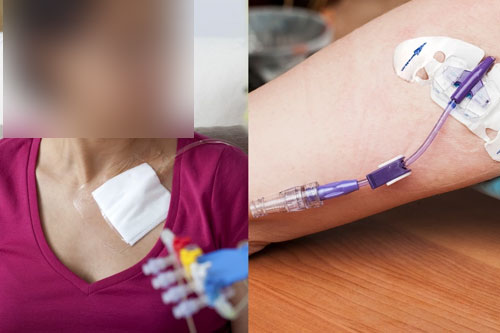
Chemo Port & PICC Line Placement
Chemo Ports and PICC Lines provide safe and reliable long-term intravenous access for patients requiring chemotherapy, prolonged medications, nutritional support, or frequent blood sampling. These image-guided minimally invasive procedures ensure comfortable treatment delivery, reduce repeated needle pricks, and improve overall patient convenience during ongoing medical care.
Conditions
Chemo Port and PICC Line placement may be recommended for:
- Cancer Treatment & Chemotherapy
- Long-Term Intravenous Therapy
- Frequent Blood Sampling
- Nutritional Support Therapy
- Antibiotic Infusions
- Chronic Medical Conditions
- Difficult Venous Access
- Repeated Intravenous Treatments
Who May Need This Procedure?
Patients may benefit from Chemo Port or PICC Line placement if they require:
- Long-term chemotherapy
- Repeated IV medications
- Frequent blood tests
- Long-term nutritional support
- Intravenous antibiotics
- Reliable vascular access
- Reduced needle pricks
- Ongoing infusion treatments
Why is Long-Term Venous Access Needed?
Long-term venous access devices are often required due to:
- Cancer therapy requirements
- Extended treatment schedules
- Recurrent hospital visits
- Frequent medication administration
- Fragile peripheral veins
- Complex medical conditions
- Need for reliable IV access
- Long-term patient care requirements
Procedure & Treatment
Advanced image-guided vascular access procedures include:
- Chemo Port Placement
- PICC Line Insertion
- Ultrasound-Guided Access
- Fluoroscopy-Guided Placement
- Port Maintenance Services
- Catheter Assessment
- Line Replacement Procedures
- Long-Term Access Management
Benefits of Treatment
- Reliable long-term venous access
- Reduced needle pricks
- Improved patient comfort
- Safe medication delivery
- Efficient chemotherapy administration
- Reduced vein damage
- Minimally invasive procedure
- Faster recovery and convenience
When to Consult a Specialist
You should seek medical advice if you require:
- Chemotherapy treatment
- Long-term intravenous medications
- Repeated blood sampling
- Nutritional infusion support
- Reliable venous access
- Long-term antibiotic therapy
- Frequent hospital-based infusions
- Specialized vascular access procedures