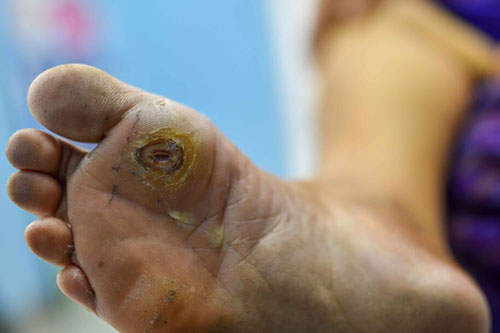
Diabetic foot ulcers and non-healing wounds commonly occur due to poor blood circulation caused by blocked arteries in the legs. If left untreated, these wounds may become infected and increase the risk of gangrene and amputation. Advanced minimally invasive procedures such as angioplasty and stenting help restore blood flow, promote wound healing, and improve limb preservation.
Diabetic foot disease may present with the following conditions:
- Diabetic foot ulcers
- Non-healing foot wounds
- Gangrenous toe changes
- Critical limb ischemia
- Poor circulation in the legs
- Infected foot ulcers
- Peripheral arterial disease
- Risk of limb loss
Common symptoms of diabetic foot and non-healing ulcers include:
- Non-healing wounds on the feet
- Foot pain or discomfort
- Numbness or tingling sensation
- Swelling in the feet
- Skin discoloration
- Foul-smelling wounds
- Gangrene of toes or foot
- Reduced blood circulation
Diabetic foot ulcers and chronic wounds can develop due to:
- Long-standing diabetes
- Poor blood circulation
- Peripheral arterial disease
- Diabetic neuropathy
- Foot injuries or trauma
- Infection
- Poor wound care
- Uncontrolled blood sugar levels
Advanced minimally invasive treatments focus on restoring circulation and promoting wound healing:
- Vascular assessment and imaging
- Diagnostic angiography
- Balloon angioplasty
- Arterial stenting
- Wound management
- Infection control
- Limb salvage procedures
- Multidisciplinary diabetic foot care
- Improved blood circulation
- Faster wound healing
- Reduced infection risk
- Prevention of tissue damage
- Lower risk of amputation
- Better foot function
- Improved quality of life
- Faster recovery with minimally invasive treatment
Proper diabetic foot care can help prevent complications:
- Maintain healthy blood sugar levels
- Inspect feet daily
- Wear proper footwear
- Keep feet clean and dry
- Avoid smoking
- Treat wounds promptly
- Attend regular diabetic checkups
- Monitor circulation and foot health